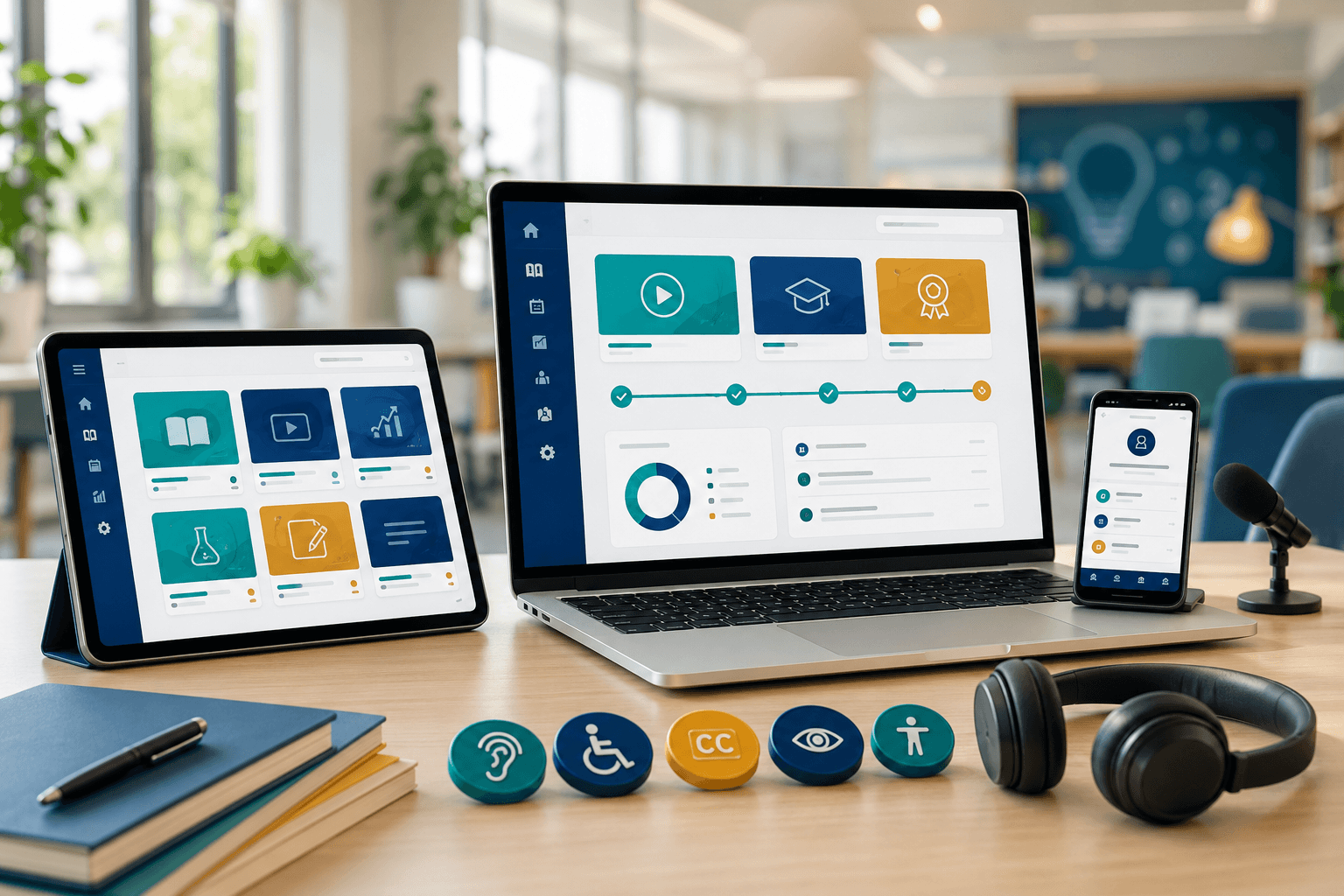
At Eight Tech Consults, we help educational institutions use technology to expand access, improve teaching and learning, strengthen administration and deliver better learner outcomes.
Our Education Technology services bring together learning platforms, instructional design, digital content development, online assessment, education data analytics, systems integration and capacity building. We support institutions at every stage of digital transformation, from strategy and readiness assessment to implementation, training, technical support and continuous improvement.
We work with universities, schools, training institutions, government agencies, development partners, professional bodies and organisations delivering workplace or community-based learning. Our solutions are designed for real operating environments and respond to the needs of learners, educators, administrators and institutional leaders.
Accessibility, learner engagement, data protection, quality assurance, low-bandwidth access and long-term institutional sustainability are integrated into our approach.
Our Education Technology Capabilities
Our products and services include:
- Learning Management Systems
- Online and blended learning platforms
- Open, Distance and e-Learning solutions
- Interactive digital learning content
- Virtual classrooms and collaboration tools
- Online assessment and examination systems
- Educational mobile applications
- Student and academic management solutions
- Learning analytics and institutional dashboards
- Instructional design and course development
- Artificial intelligence for education
- Educator training and professional development
- Digital learning strategies and readiness assessments
- Platform hosting, maintenance and technical support
Learning Management Systems
We implement, customise and support Learning Management Systems that enable institutions to organise, deliver, monitor and improve education and training.
Our LMS solutions provide capabilities such as:
- Course and programme management
- Learner enrolment and user administration
- Multimedia learning resources
- Assignments, quizzes and online examinations
- Discussion forums and collaborative activities
- Competency and completion tracking
- Gradebooks and learner feedback
- Learning analytics and progress reports
- Certificates and digital credentials
- Notifications and communication tools
- Mobile and low-bandwidth access
- Role-based permissions and audit trails
We work with established platforms such as Moodle and can develop or integrate purpose-built learning solutions where institutional requirements demand a different approach.
Our services cover platform installation, configuration, interface customisation, branding, hosting, migration, integration, security, performance optimisation, upgrades and ongoing support.
Open, Distance and e-Learning Solutions
We support institutions to design and implement effective Open, Distance and e-Learning programmes that extend access without compromising educational quality.
Our services include:
- Institutional ODeL readiness assessments
- Digital learning strategy development
- ODeL policy and implementation frameworks
- Programme and course conversion
- Online learner-support frameworks
- Digital assessment strategies
- Quality-assurance systems
- Academic and technical staff development
- Orientation programmes for online learners
- Technology and infrastructure planning
- Monitoring and evaluation of digital learning programmes
We consider the complete learning ecosystem, including governance, pedagogy, content, technology, student support, assessment, quality assurance and staff capacity.
Instructional Design and Course Development
Effective digital learning requires more than uploading documents to an online platform. We work with subject matter experts and educators to transform curricula and training materials into structured, engaging and measurable learning experiences.
Our instructional design services include:
- Learning needs and audience analysis
- Curriculum and course mapping
- Development of learning outcomes
- Course structure and learning pathways
- Storyboarding and content planning
- Design of learning activities
- Assessment and feedback strategies
- Facilitator and learner guides
- Course quality review
- Online and blended delivery planning
We apply recognised instructional design approaches and align learning content, activities and assessments with the intended competencies and outcomes.
Interactive Digital Learning Content
We develop engaging digital content for academic, professional, workplace and community learning.
Our content may include:
- Interactive lessons and presentations
- Educational videos and animations
- Audio lessons and podcasts
- Quizzes and knowledge checks
- Scenario-based learning
- Simulations and demonstrations
- Infographics and visual explainers
- Interactive case studies
- Digital manuals and learner guides
- Microlearning modules
- Branching activities and decision exercises
We use suitable multimedia and authoring tools to produce content that can be delivered through an LMS, website, mobile application or standalone package.
Where required, content can be developed using standards such as SCORM, xAPI and H5P to improve portability, interoperability and learner tracking.
Virtual Classrooms and Collaborative Learning
We design and integrate virtual classroom solutions that enable educators and learners to interact in real time.
These solutions may provide:
- Live video and audio instruction
- Screen and presentation sharing
- Breakout rooms
- Polls and interactive questions
- Digital whiteboards
- Session recording
- Chat and moderated discussion
- Attendance tracking
- Collaborative documents and activities
- Integration with learning platforms
We can integrate platforms such as Microsoft Teams, Zoom, Google Meet and BigBlueButton into the wider digital learning environment.
Our focus extends beyond the technology itself. We also help educators structure live sessions, facilitate participation and combine synchronous learning with well-designed self-paced activities.
Online Assessment and Evaluation
We develop assessment solutions that help institutions measure learning consistently, efficiently and securely.
Our capabilities include:
- Online quizzes and examinations
- Question banks and randomised assessments
- Automated and instructor-led grading
- Assignment submission and marking workflows
- Rubrics and competency-based assessment
- Continuous assessment tracking
- Immediate and personalised feedback
- Examination scheduling and access controls
- Plagiarism-detection integration
- Assessment analytics and reporting
- Practical and portfolio-based assessment
- Learner and course evaluations
We help institutions align assessments with learning outcomes and apply appropriate controls to improve validity, integrity and fairness.
Educational Applications and Digital Products
We design web and mobile applications that respond to the needs of learners, educators, administrators and education leaders.
These may include:
- Mobile learning applications
- Digital libraries and resource repositories
- Student support and advising platforms
- Educational games and gamified learning tools
- Language and literacy applications
- Career guidance and employability platforms
- Teacher-support applications
- School and institutional portals
- Community education platforms
- Professional development and certification systems
Our applications can incorporate offline access, notifications, progress tracking, multimedia, local languages and synchronisation for users working in areas with limited connectivity.
Artificial Intelligence in Education
We help institutions explore and adopt artificial intelligence responsibly to improve learning, teaching and educational administration.
Our AI-supported education solutions may include:
- Institutional knowledge assistants
- Learner-support chatbots
- Intelligent search across approved learning resources
- Personalised learning recommendations
- Automated formative feedback
- Question and activity generation
- Content summarisation and simplification
- Learning-risk and early-warning indicators
- Academic and administrative workflow automation
- Analysis of learner feedback and engagement
- Educator support for lesson and assessment preparation
AI tools are designed to support educators and institutional processes, not to replace professional academic judgement.
We incorporate appropriate safeguards relating to privacy, bias, transparency, academic integrity, human oversight and the responsible use of learner data.
Learning Analytics and Decision Support
We help institutions use education data to understand learner participation, identify challenges and improve programmes.
Our learning analytics services may include:
- Learner engagement and participation analysis
- Course completion and progression tracking
- Assessment and performance trends
- Identification of learners who may need support
- Programme and course-comparison reports
- Educator and departmental dashboards
- Resource and activity utilisation
- Student feedback analysis
- Executive and regulatory reporting
- Evaluation of digital learning interventions
We develop dashboards and reports that translate platform data into clear information for educators, programme managers and institutional leaders.
Analytics are applied carefully and ethically. Indicators are used to guide investigation and support rather than make unreviewed decisions about learners.
Integration with Institutional Systems
We integrate education platforms with other institutional systems to reduce duplication and improve the flow of information.
Integrations may include:
- Student Information Systems
- Academic Management Systems
- Human Resource Management Systems
- Digital libraries and repositories
- Identity and single sign-on services
- Microsoft 365 and Google Workspace
- Virtual classroom platforms
- Payment and financial systems
- SMS, email and mobile notification services
- Plagiarism-detection services
- Video and multimedia platforms
- Reporting and business-intelligence systems
We use secure APIs, recognised interoperability standards and appropriate authentication controls to create a more connected digital education environment.
Where applicable, we support standards such as Learning Tools Interoperability, SCORM and xAPI.
Educator Training and Professional Development
Technology produces meaningful results when educators have the confidence and skills to use it effectively.
We provide practical training and professional development in:
- Learning Management System administration
- Online course design and facilitation
- Development of interactive digital content
- Online learner engagement
- Virtual classroom facilitation
- Digital and competency-based assessment
- Effective online feedback
- Learning analytics and reporting
- Inclusive and accessible digital teaching
- Responsible use of artificial intelligence
- Copyright, licensing and open educational resources
- Academic integrity and online assessment practices
Training can be delivered through workshops, online courses, coaching, communities of practice and structured institutional capacity-building programmes.
Learner Orientation and Support
We help institutions prepare learners to participate successfully in online and blended education.
Learner orientation may cover:
- Accessing and navigating the learning platform
- Participating in online classes and activities
- Submitting assignments and completing assessments
- Communicating with educators and peers
- Managing time and independent study
- Digital citizenship and online conduct
- Academic integrity
- Data privacy and online safety
- Accessing academic, technical and wellbeing support
We can develop orientation courses, help resources, video tutorials, user guides and support workflows tailored to the institution.
Accessibility and Inclusive Learning
Our education technology solutions are designed to reach learners with different abilities, devices, connectivity levels and learning circumstances.
We consider:
- Mobile-responsive design
- Low-bandwidth and offline access
- Clear navigation and readable interfaces
- Keyboard accessibility
- Captions, transcripts and alternative text
- Accessible document and multimedia formats
- Compatibility with assistive technologies
- Flexible learning pathways
- Inclusive language and representation
- Gender, disability and socioeconomic barriers
- Localisation and multilingual delivery
We use recognised web accessibility principles, including relevant WCAG guidance, to make digital learning more equitable and usable.
Technologies and Tools
We select technologies according to institutional needs, infrastructure, user capacity, scale and long-term sustainability. Our toolkit may include:
Learning platforms: Moodle and custom web-based learning platforms.
Interactive content: H5P, SCORM-compatible authoring tools, video, animation and multimedia-production applications.
Virtual learning: Microsoft Teams, Zoom, Google Meet and BigBlueButton.
Mobile learning: Native, cross-platform and progressive web application technologies.
Learning analytics: Moodle reporting tools, Power BI, Tableau, Looker Studio and custom dashboards.
Cloud and hosting: Microsoft Azure, Amazon Web Services, Google Cloud and secure Linux or Windows server environments.
Integration: REST APIs, Learning Tools Interoperability, single sign-on, Microsoft 365, Google Workspace and institutional information systems.
Artificial intelligence: Large language models, natural language processing, semantic search, predictive analytics and institutionally controlled knowledge systems.
Technology is selected as part of a wider educational strategy. We prioritise suitability, security, usability, interoperability, maintainability and total cost of ownership.
Our Implementation Approach
We use a collaborative and evidence-informed approach to ensure that technology supports real educational needs.
- Discovery and readiness assessment
We examine institutional objectives, programmes, users, infrastructure, connectivity, existing systems, policies and internal capacity. - Strategy and solution design
We define the learning model, platform requirements, integrations, support structure, implementation plan and measures of success. - Platform configuration and development
We install, customise, integrate or develop the required technology and prepare it for institutional use. - Course and content development
We work with educators and subject matter experts to design courses, develop content and align assessments with learning outcomes. - Testing and quality assurance
We test functionality, usability, accessibility, performance, security, integrations and educational quality. - Training and change support
We prepare administrators, educators, support teams and learners to adopt the new environment confidently. - Pilot implementation
Where appropriate, we begin with selected courses or programmes, gather evidence and improve the solution before wider deployment. - Institutional rollout
We support migration, onboarding, communication, deployment and the transition to routine institutional use. - Monitoring and continuous improvement
We review usage, learner experience, system performance and educational outcomes to guide ongoing improvement.
Quality Assurance and Data Protection
Our education technology work is supported by:
- Clearly defined educational and technical requirements
- Course and content quality-review frameworks
- User acceptance and accessibility testing
- Role-based access and secure authentication
- Protection of learner and institutional data
- Secure backups and recovery procedures
- System monitoring and audit trails
- Documented administration and support processes
- Responsible use of learner analytics
- Compliance with applicable institutional policies and data-protection requirements
- Regular platform maintenance and security updates
Maintenance and Technical Support
We provide ongoing support to keep learning platforms secure, reliable and responsive to changing institutional needs.
Our support services may include:
- Platform hosting and administration
- User and administrator support
- Software updates and security patches
- Performance monitoring and optimisation
- Backup and recovery management
- Troubleshooting and incident resolution
- Course and user-management support
- Integration maintenance
- Reporting and analytics support
- Feature enhancement and platform improvement
- Refresher training and knowledge transfer
Support arrangements can be structured around the institution’s scale, service requirements and internal capacity.
What Clients Receive
Depending on the assignment, our deliverables may include:
- Digital learning strategy or implementation plan
- Institutional readiness and needs-assessment report
- Configured and branded learning platform
- Online courses and interactive learning resources
- Virtual classroom and assessment integrations
- Mobile learning application
- Learning analytics dashboards
- Policies, standards and operating procedures
- Administrator, educator and learner guides
- Training and capacity-building programmes
- Quality-assurance and course-review tools
- Technical documentation and knowledge transfer
- Maintenance, hosting and support services
- Monitoring and continuous-improvement framework
At Eight Tech Consults, we do more than introduce technology into education. We help institutions build inclusive, engaging and sustainable learning environments in which educators are supported, learners can succeed and evidence guides continuous improvement.
