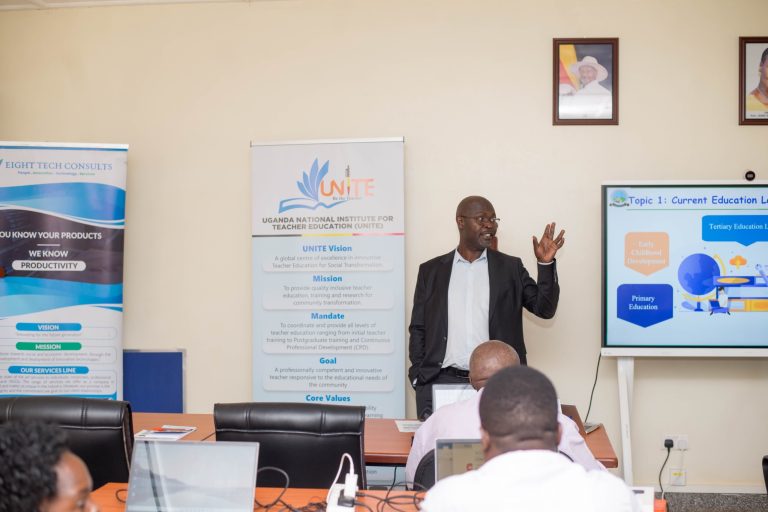
The integration of digital tools into agriculture has the potential to revolutionize farming practices, enhance productivity, and improve market access. Recognizing this, a five-day Digital Skills Training program was successfully conducted in four districts: Kanungu, Kapelebyong, Kaberamaido, and Buhweju. The initiative aimed to equip farmers with essential ICT skills to leverage technology for agricultural growth and economic empowerment.
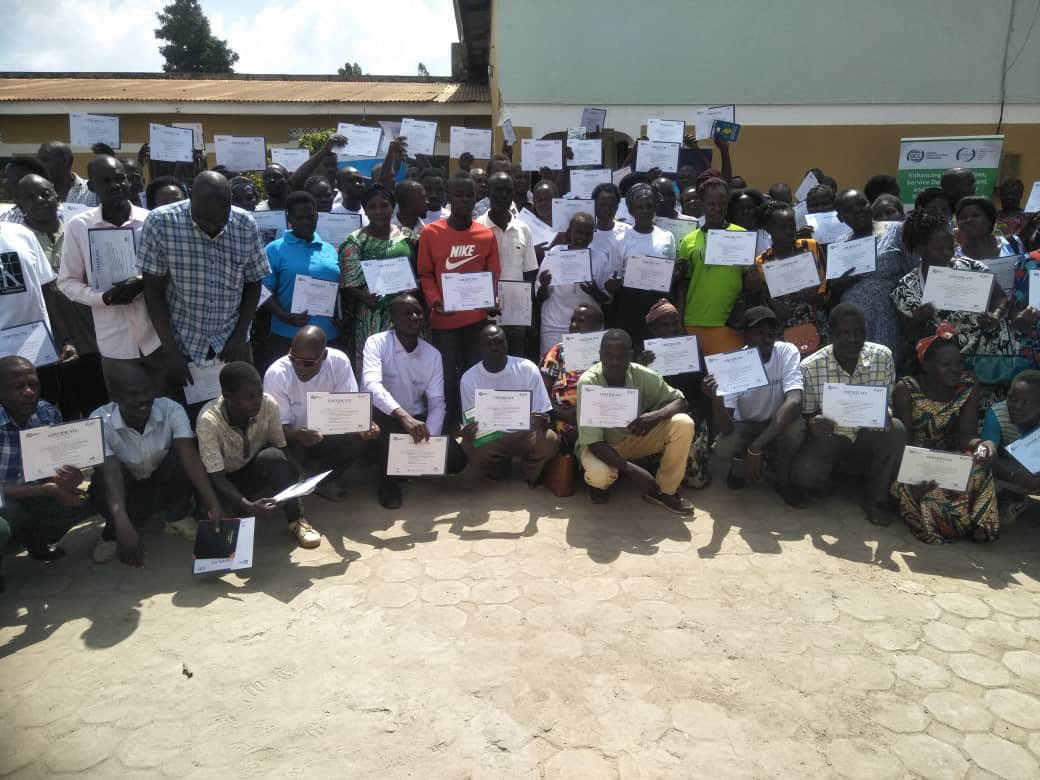
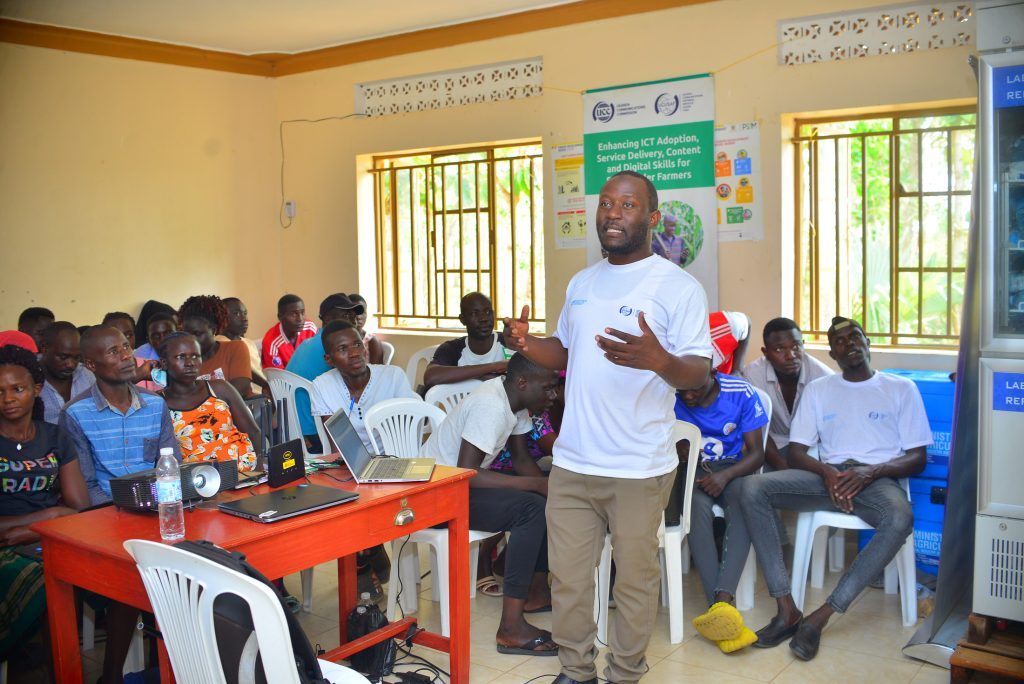
The training commenced with great enthusiasm, attracting over 400 participants across the four districts. Each district’s session was officially opened by local leaders, showing the commitment of government and community stakeholders to advancing digital literacy in agriculture.
Key Focus Areas of the Training
The training was structured to provide both foundational and advanced digital skills
tailored to the needs of farmers. The key topics covered included:
1. Basic Digital Literacy – Participants were introduced to digital devices, computer operation, and internet connectivity.
2. Online Safety and Cyber Awareness – Ensuring farmers understand the risks and best practices for secure online engagement.
3. Microsoft Office Suite Training – Focused on MS Word, Excel, and PowerPoint to enhance documentation and record-keeping skills.
4. E-Agriculture Platforms – Farmers explored digital platforms that provide real- time agricultural information, weather updates, and market prices.
5. E-Government Services – Training on accessing government agricultural support services and financial inclusion through digital banking.
6. Digital Marketing and Social Media – Farmers learned how to use social media and other digital marketing tools to promote their produce and connect with buyers.
7. Mobile Money Services – Educating participants on digital financial transactions, including mobile money and online banking.
District Highlights
● Kanungu District: The training emphasized ICT applications in agriculture, with a notable interest in e-agriculture platforms. Participants requested more sessions on smartphone utilization and digital marketing.
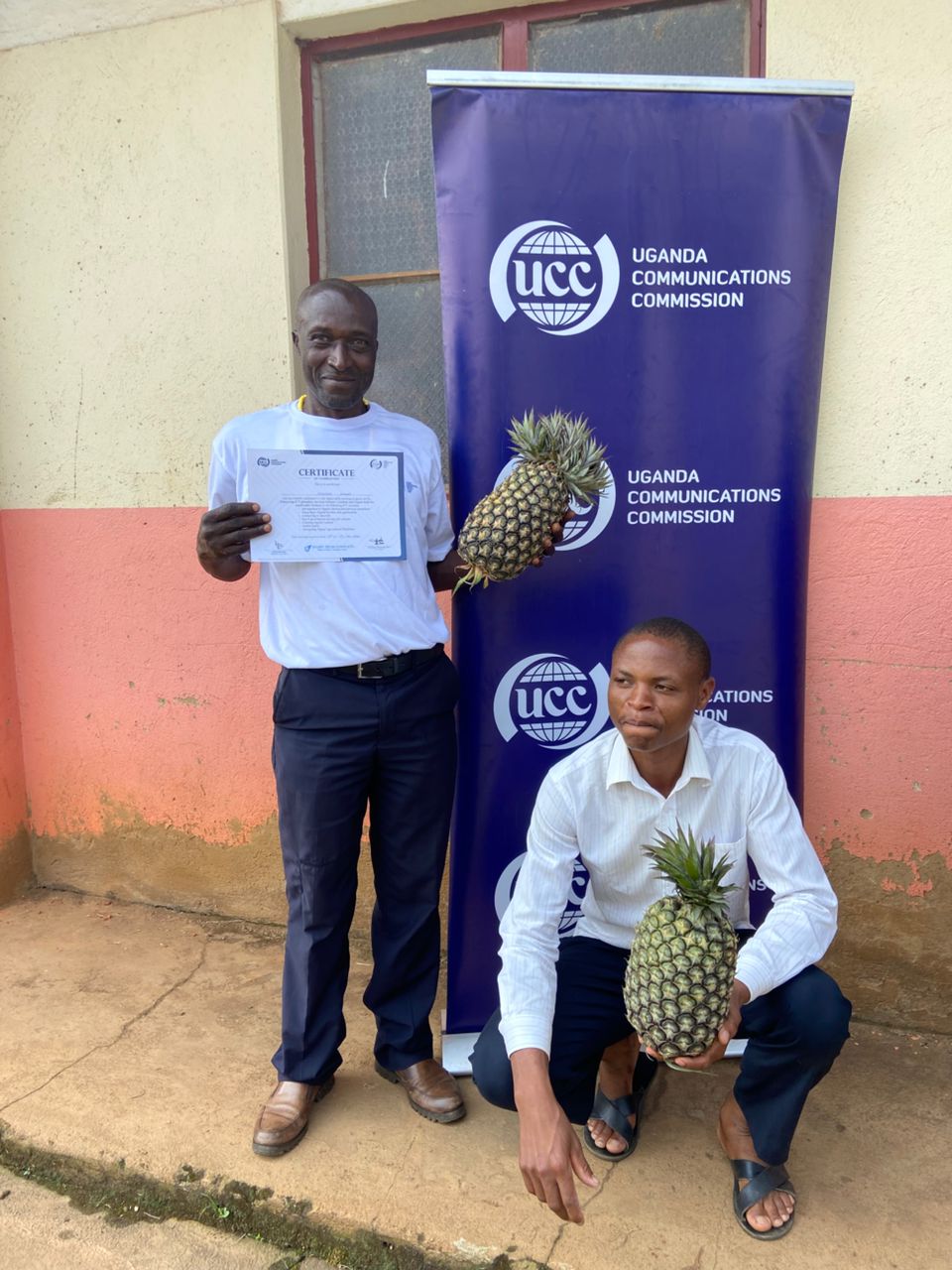
● Kapelebyong District: The presence of a Uganda Communications Commission (UCC) representative underscored the government’s support for digital literacy. Farmers engaged deeply in practical sessions on MS Word, email communication, and online searches.
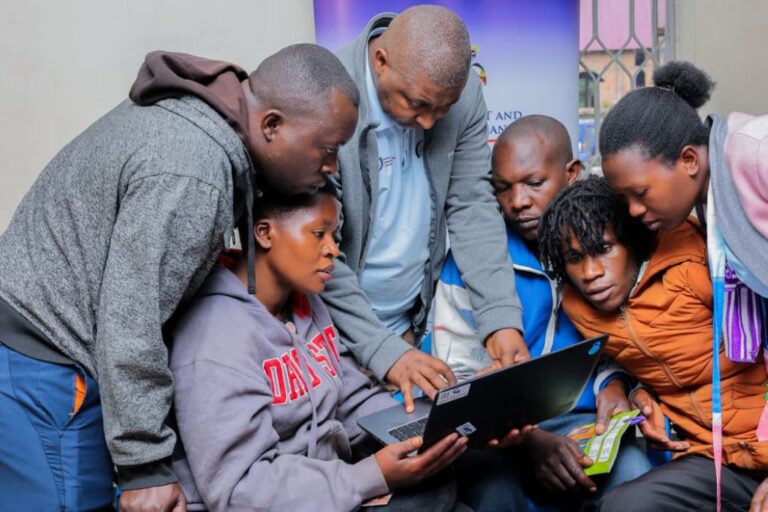
● Kaberamaido District: Participants learned to navigate search engines, use Google Maps, and connect to e-government platforms. Despite limited smartphone access, farmers actively engaged in practical exercises.
● Buhweju District: The training faced logistical challenges such as power outages and limited internet connectivity. However, participants remained resilient, with many registering on agricultural digital platforms and successfully setting up mobile banking services.
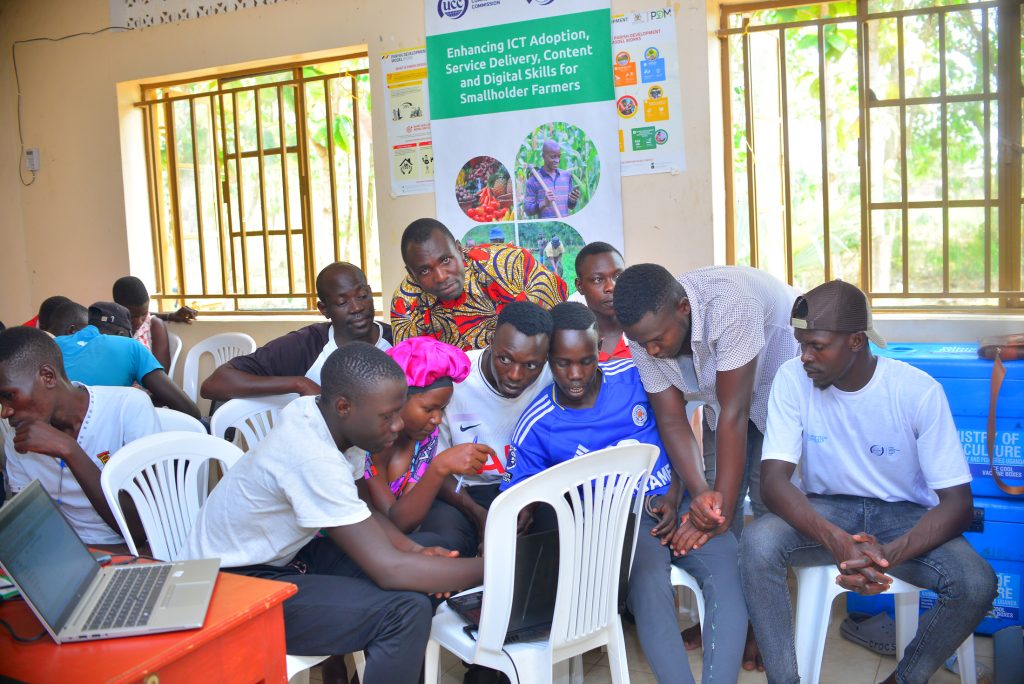
By the end of the training, farmers had acquired practical skills to integrate technology into their farming practices. The issuance of certificates of completion further motivated participants to continue learning and applying their new knowledge. Feedback from the farmers highlighted a growing appreciation for digital tools, with many expressing a desire for more advanced training in the future.
The success of this initiative sets the foundation for future programs aimed at deepening digital literacy among Ugandan farmers. Continuous engagement, mentorship, and follow-up training will be essential to ensure sustained impact. Additionally, partnerships with stakeholders such as financial institutions, telecom companies, and agricultural organizations can further support digital inclusion in rural farming communities.
The Digital Skills Training for Farmers has demonstrated that with the right tools and knowledge, farmers can enhance their productivity and economic opportunities through technology. As we continue to embrace the digital revolution, empowering rural communities with ICT skills remains crucial for sustainable agricultural development. This initiative not only equips farmers with essential digital capabilities but also strengthens their ability to compete in an increasingly digital global economy.