
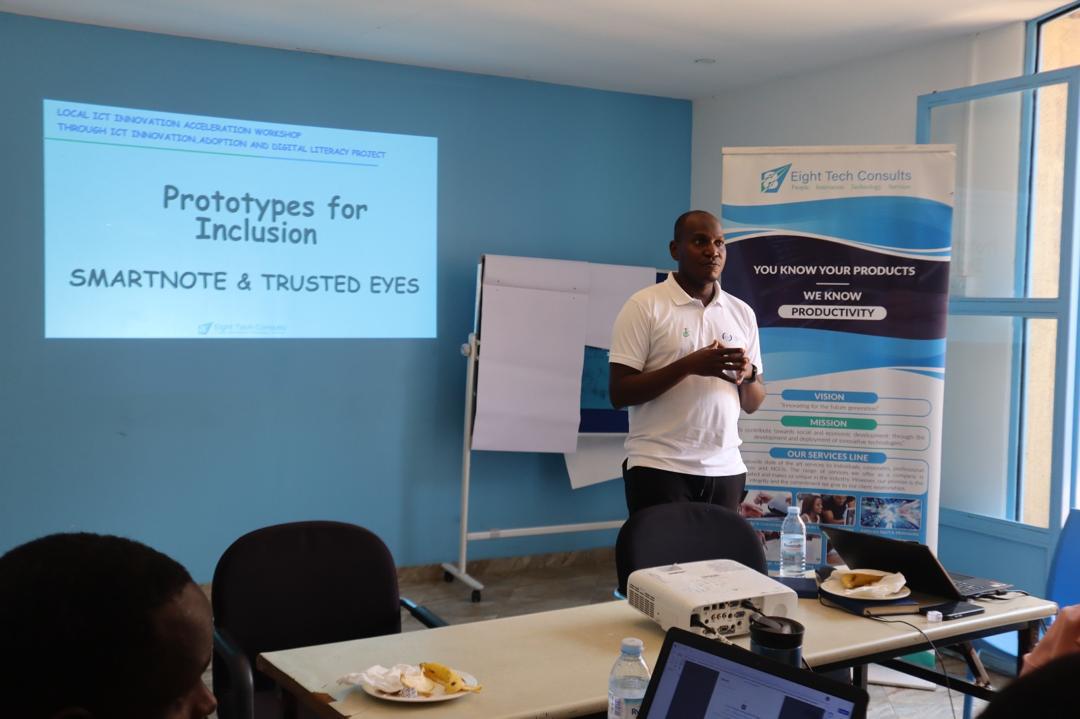
What is ICT4PWDs
The ICT4PWDs initiative is a national digital inclusion program supported by the Government of Uganda through the Uganda Communications Commission (UCC) in partnership with the National Union of Disabled Persons of Uganda (NUDIPU) and Eight Tech Consults Ltd. It focuses on enhancing digital literacy, access to assistive technologies, and inclusive innovation among persons with disabilities (PWDs). The program empowers PWDs with the skills and tools needed to actively participate in Uganda’s growing digital economy and society. In July 2025, the digital skilling component reached participants from 35 districts, delivering practical modules on device usage, accessibility tools, online communication, e-services, and cyber safety. This milestone marked a significant step toward bridging the digital divide and ensuring that no person with a disability is left behind in Uganda’s digital transformation.
Where the Idea Began
The story of Uganda’s first locally developed assistive technology prototypes began with a simple, powerful question from a visually impaired trainee Mr. Godfrey Kimuli From Mukono District during recent ICT for Persons with Disabilities (ICT4PWDs) digital literacy sessions training.
 “Can we have an app that speaks our language?”- Mr. Godfrey Kimuli
That moment planted a seed of innovation within the Eight Tech Consults Ltd development team one that would grow into a national symbol of digital inclusion. Listening to the lived experiences of Persons with Disabilities (PWDs) across 35 districts, the team envisioned practical, Ugandan-made solutions that respond to local needs, cultures, and languages.
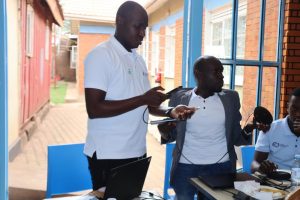 From those conversations emerged two pioneering innovations: SmartNote and Trusted Eyes technologies built by Ugandans, for Ugandans, to transform accessibility and independence for visually impaired persons.
Why Uganda Needed Local Solutions
For many years, Persons with Disabilities in Uganda have relied on imported assistive technologies that are costly, language-limited, and often incompatible with the realities of rural users. These foreign solutions seldom consider local dialects, intermittent internet access, or cultural nuances.
Research under the ICT4PWDs program revealed that over 68% of PWDs lack access to adaptive digital tools, and 72% of visually impaired persons rely on others for essential daily activities such as identifying currency or navigating public spaces.
Uganda needed innovations that reflect her people, her languages, and her unique challenges as captured from the stakeholders insights during the stakeholder prototype review session help, on 18th October 2025 at the NUDIPU offices in Kampala . This workshop brought together experts from academia, industry, technocrats and others in the disability fraternity. The prototypes developed for the upcoming innovations include; SmartNote and Trusted Eyes which answer that call demonstrating that inclusion can be achieved when innovation is rooted in local context.
What the Prototypes Do
SmartNote empowers visually impaired persons to identify Ugandan currency independently and confidently. The app recognizes denominations using the phone camera and speaks the value aloud in local Five (5) languages, including Luganda, Runyankore, Ateso, Luo, and Swahili. It operates offline, making it practical for rural users, and promotes financial privacy and autonomy an essential step toward economic empowerment.
Trusted Eyes complements SmartNote as a real-time visual support platform. Through audio and video connectivity, it links users to trained local volunteers who can assist with navigation, object identification, and daily tasks. The app also integrates AI-powered object and text recognition, offering users an additional layer of independence.
Together, these innovations redefine accessibility in Uganda bridging the gap between disability and opportunity through technology that understands local realities.
How They Will Be Delivered
The delivery strategy for the prototypes is structured into three progressive phases:
- Prototype Refinement and User Testing – Incorporating user feedback, enhancing accessibility, and optimizing multi-language functionality.
- Regional Pilot Implementation – Deploying across Central, Western, and West Nile regions to ensure broad representation and inclusivity.
- Public Rollout and Awareness – Partnering with government agencies, development partners, and media to promote adoption and awareness.
The process is being led by Eight Tech Consults Ltd in partnership with NUDIPU, as part of the ICT FOR PERSONS WITH DISABILITIES Program supported by UCUSAF through the Uganda Communications Commission (UCC), ensuring that the innovations are both scalable and sustainable
At its heart, this innovation drive is not merely about technology it is about dignity, independence, and inclusion. By localizing assistive solutions, Uganda is taking ownership of its digital inclusion journey and inspiring a future where no one is left behind.
As Mr. Kisaame Samuel, Project Ambassador for ICT4PWDs, proudly notes:
“When we design solutions in our own languages, we give every person the power to participate fully in their society. These innovations are not just apps they are symbols of hope, independence, and inclusion.”
By bridging the gap between innovation and inclusion, the ICT4PWDs project has set a powerful example of what is possible when communities, developers, and persons with disabilities build together.