
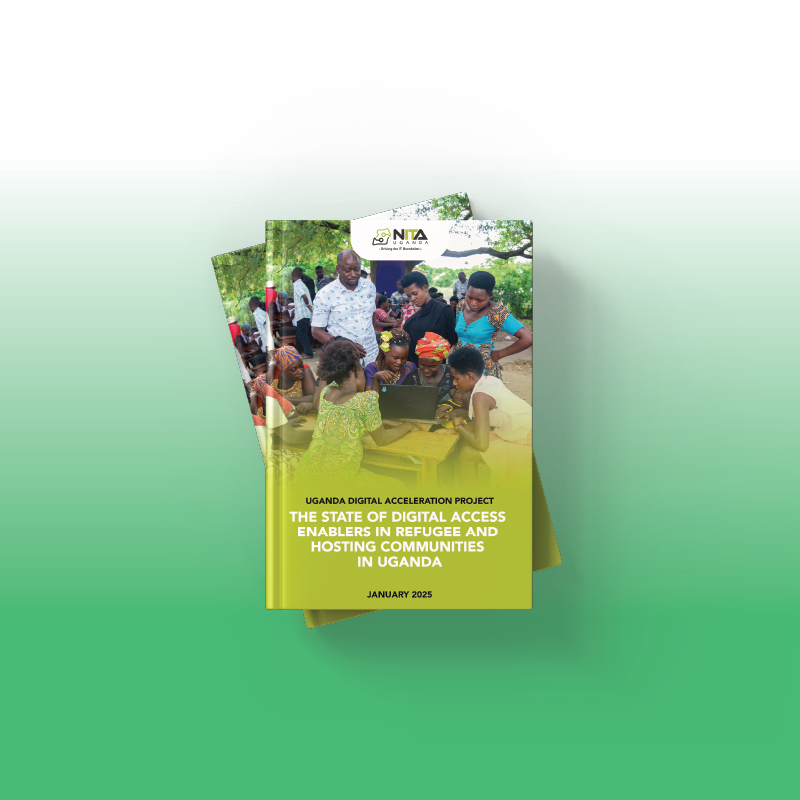
The project, commissioned by NITA-U with World Bank support, aims to assess and enhance digital access enablers in 13 Refugee Hosting Districts (RHDs) of Uganda, including Kampala. The study responds to the urgent need for improved digital infrastructure and services for both refugees and host communities, supporting Uganda’s digital transformation roadmap and universal service policies.
Objectivies
The overall objective of the study was to assess the current status of the digital ecosystem in Uganda’s Refugee Hosting Districts (RHDs)-including regulatory environment, infrastructure, access, usage, and digital literacy-and to provide evidence-based recommendations for establishing effective and sustainable digital service delivery channels for both refugees and host communities.
The specific objectives included:
- Assess the extent of digital infrastructure coverage, connectivity, and the level of access and usage of digital services in RHDs.
- Evaluate the feasibility and potential impact of establishing and operationalizing 24 sustainable Digital Uganda Service Centers in 13 RHDs, including architectural, structural, and environmental considerations.
- Identify digital skills gaps among refugees and host populations, with a focus on women, youth, persons with disabilities (PWDs), and MSMEs, and profile existing digital literacy providers to inform sustainable capacity-building initiatives.
- Determine the needs and relevance of connectivity and assistive technologies for PWDs, and define the characteristics of inclusive training content in both refugee and host communities.
- Examine the state of electronic device end-of-life management and identify investment opportunities for device repair and e-waste management in both refugee and host communities.
- Benchmark best practices from at least one comparable country to inform the design and implementation of digital access enablers in Uganda’s RHDs.
Tasks Completed
- Reviewed relevant ICT policies and sector studies.
- Developed research design and stakeholder engagement plan.
- Conducted benchmarking with at least one country.
- Designed and deployed stakeholder consultations (interviews, surveys) across RHDs.
- Assessed digital ecosystem status, skills, device access, and service models.
- Conducted environmental impact assessment for proposed centers.
- Drafted architectural and structural designs for digital service centers.
- Prepared draft and final study reports, including recommendations and business models.
- Organized stakeholder validation workshop.
- Provided input for implementation bid documents.
- Compiled end-of-project report with lessons learned.
Output
- Inception report and detailed work plan.
- Situational analysis/interim report.
- Stakeholder consultation agenda and invitees list.
- Draft and final study reports with recommendations.
- Detailed architectural and engineering designs, BoQs, and cost estimates for 24 digital service centers.
- Digital skills assessment and provider profiles.
- Business case models for sustainable digital service delivery.
- End-of-project report with key recommendations