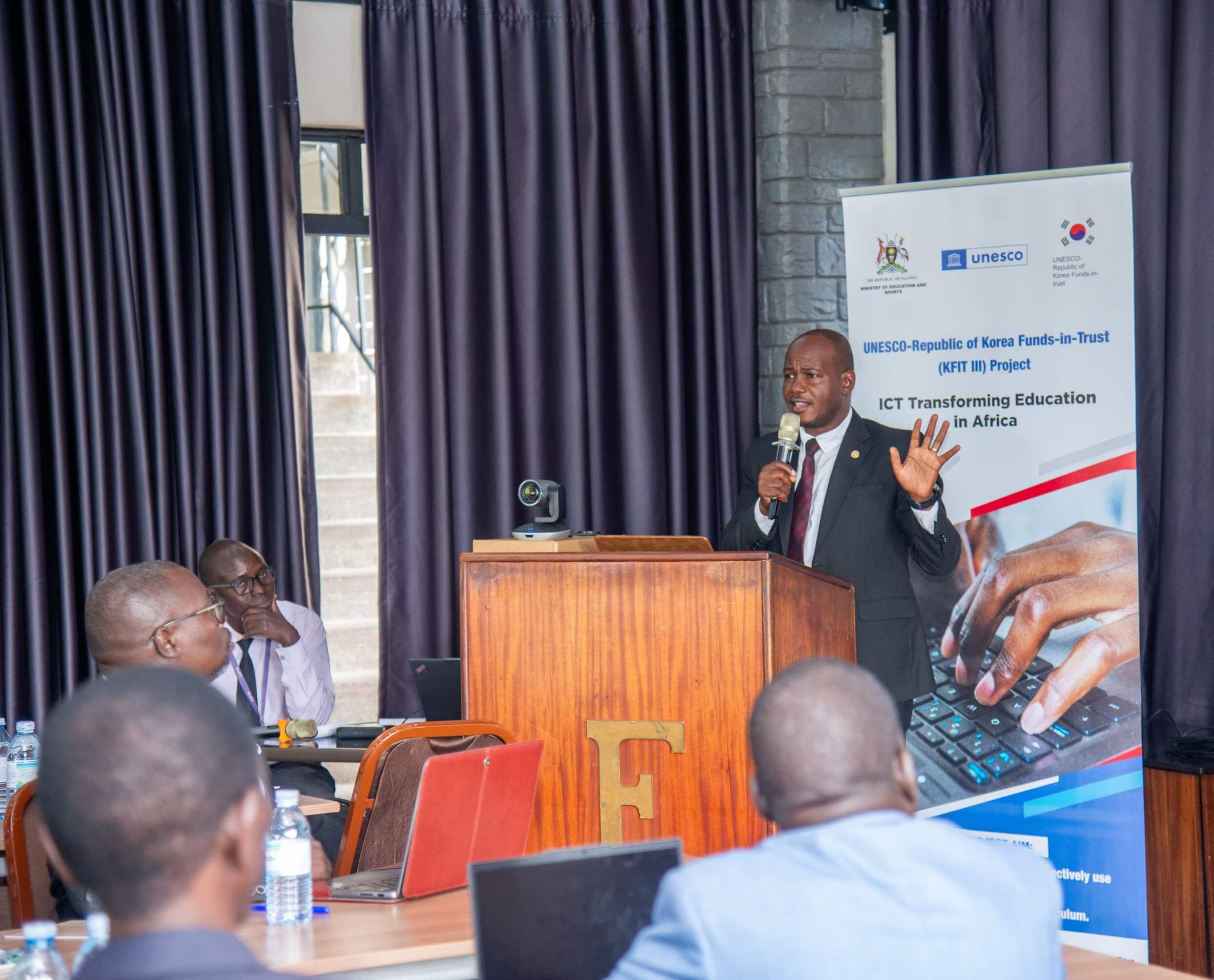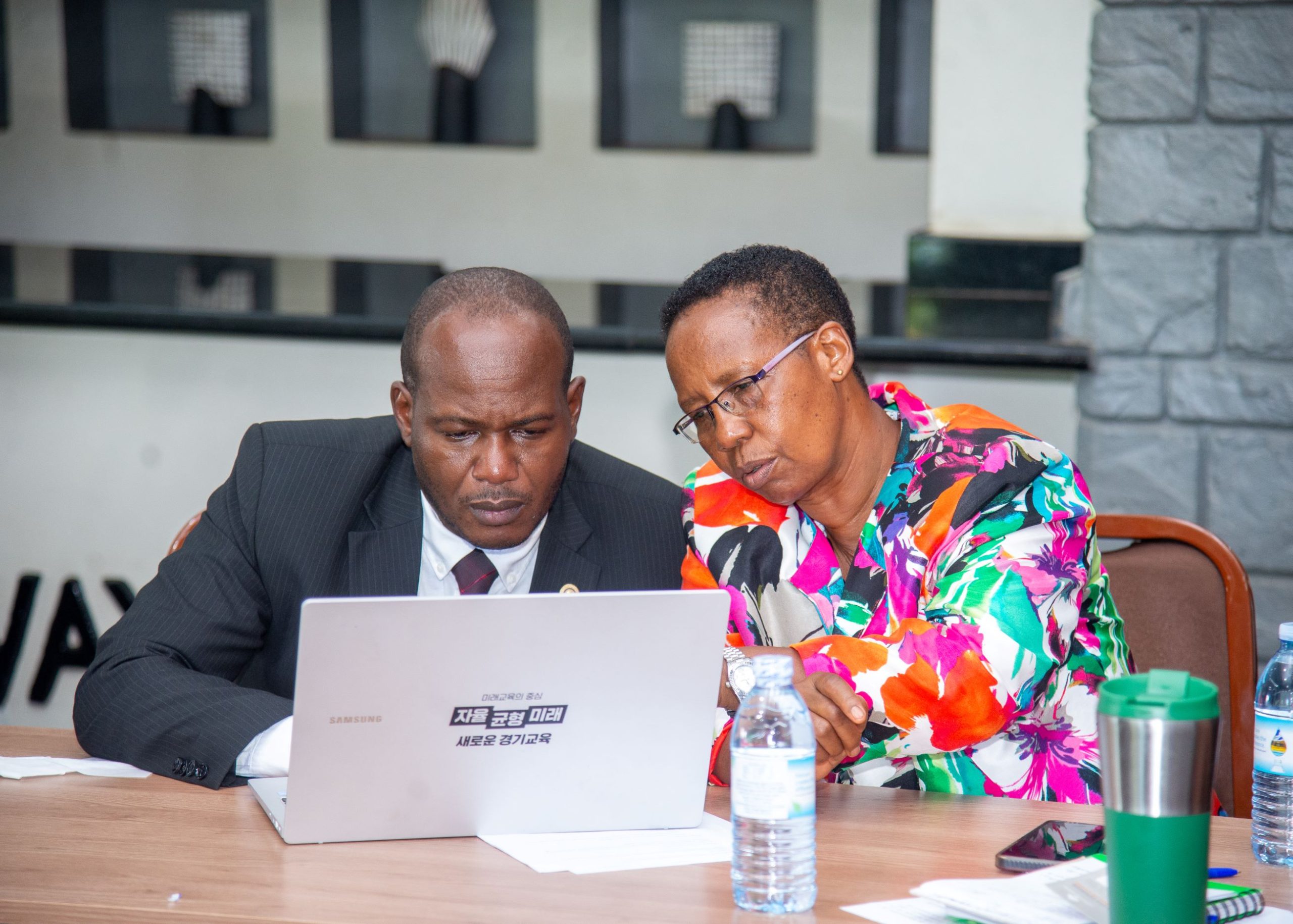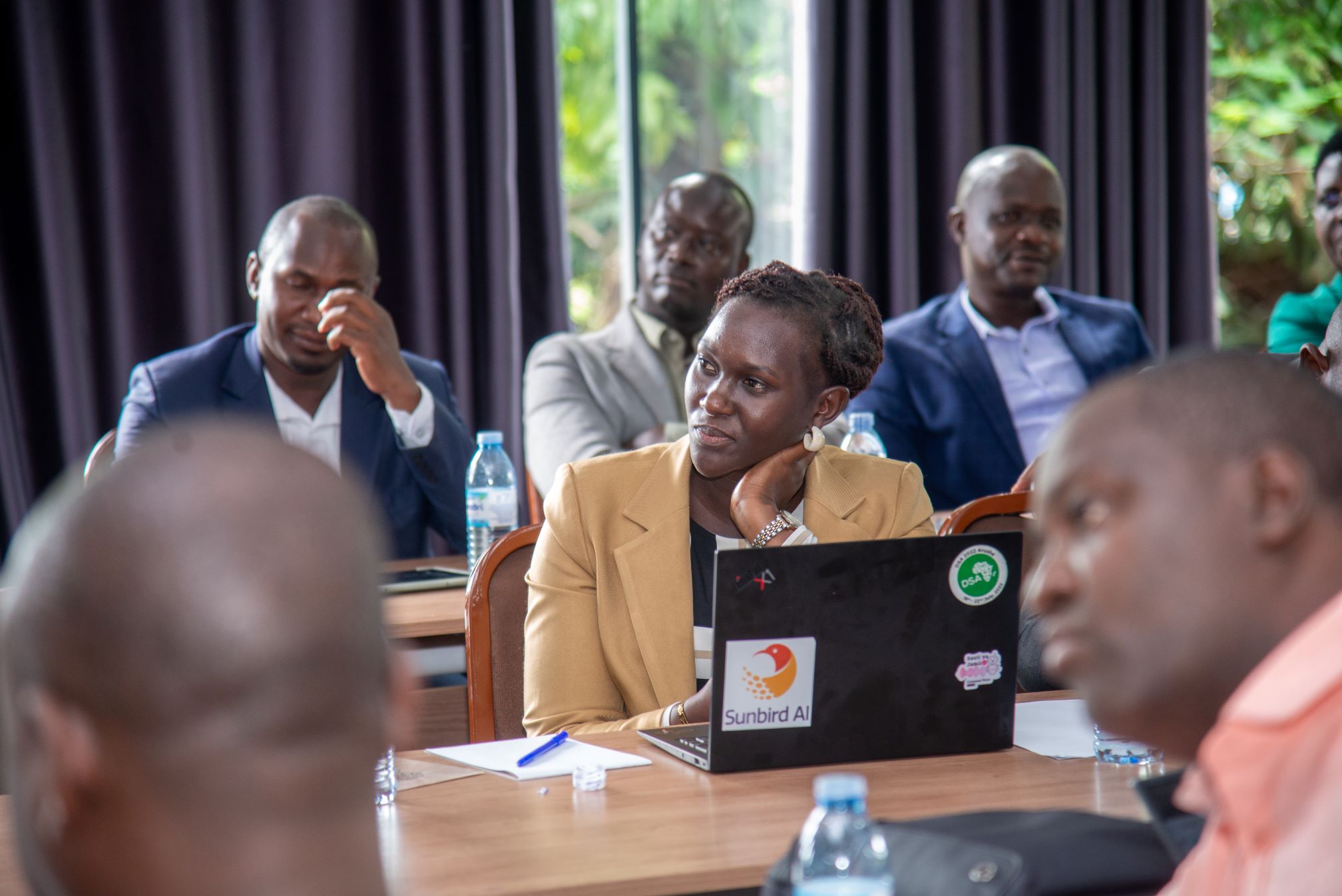
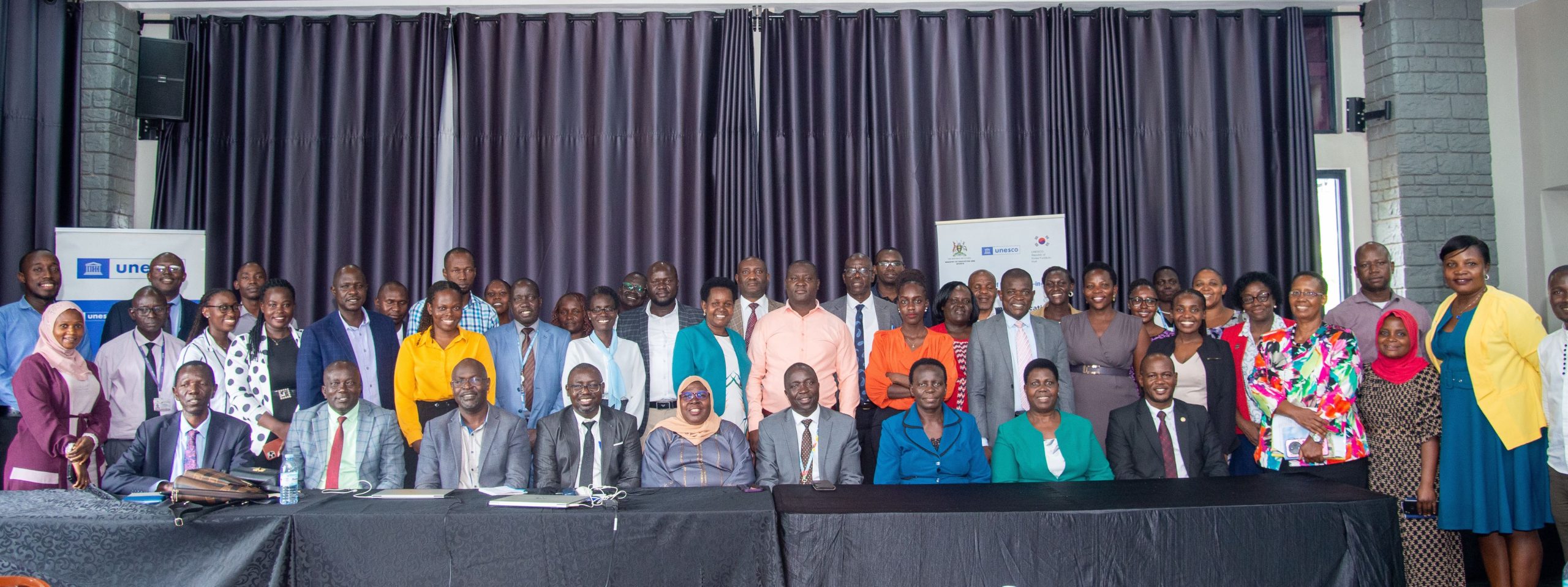
On 24th April 2025, UNESCO held a stakeholder validation workshop for the updated ICT competence Framework for Teachers, E-learning systems assessment and Policy review in education.
The United Nations Educational, Scientific and Cultural Organization (UNESCO) has long been at the forefront of promoting inclusive, quality education worldwide. Through its various global initiatives, UNESCO supports countries in integrating Information and Communication Technologies (ICT) into their education systems to bridge the digital divide, promote equity, and prepare learners for the knowledge economy.
One such initiative is the “ICT Transforming Education in Africa” project, supported by the Republic of Korea Fund-in-Trust (KFIT III). This initiative aims to strengthen national capacities for the effective use of ICT in education, particularly through updating teacher competencies and enhancing digital learning infrastructure. In Uganda, this project is being implemented in close collaboration with the Ministry of Education and Sports (MoES) and the UNESCO Uganda National Project Office.
The workshop was attended by several sector opinion leaders including the Permanent Secretary of Ministry of Education and Sports
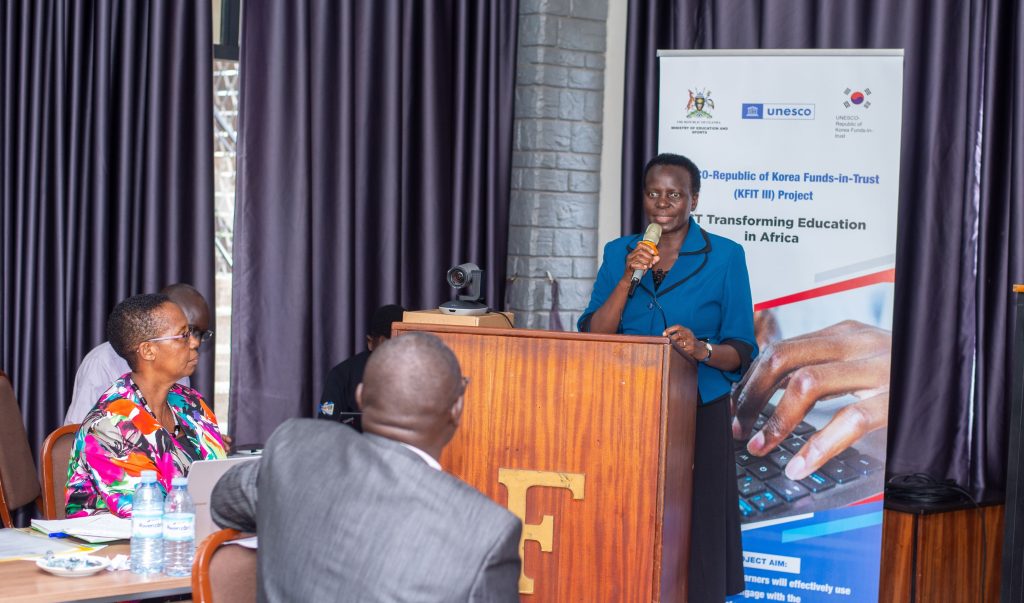
The Permanent Secretary of Ministry of Education and Sports Dr. Kedrace Turyagyenda ICT should be put at the forefront of Uganda’s education system
who officiated the session and thanked the participants, project organizer’s and further affirmed that on behalf of the ministry the teachers will not be left behind despite the few challenges that have happened but its now evident that teachers need to be at the forefront of the ICT sector and also supported the need to Specific ICT in education policy to suit the teachers needs.
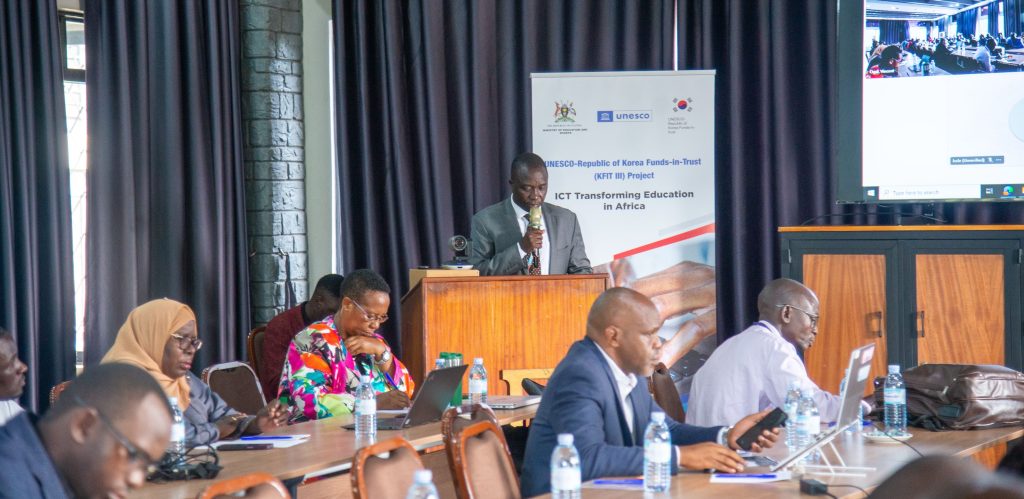
UNESCO Director Uganda :Mr. Draecabo Charles
“there is no dedicated ICT policy in education.”
As a trusted leader in digital transformation, Eight Tech Consults Ltd was selected to lead the review and update of Uganda’s ICT Competency Framework for Teachers (CFT). This effort sought to update the framework in line with current educational needs, policy shifts, and global technological trends.
The existing 2016 ICT CFT, though progressive at the time, had grown outdated and misaligned with Uganda’s competency-based curriculum, the Education Digital Agenda Strategy and the lower secondary competency based curriculum. Eight Tech was tasked with identifying the critical gaps and proposing a way forward that would future-proof Uganda’s education workforce, said Fiona Nambogo During her presentation.
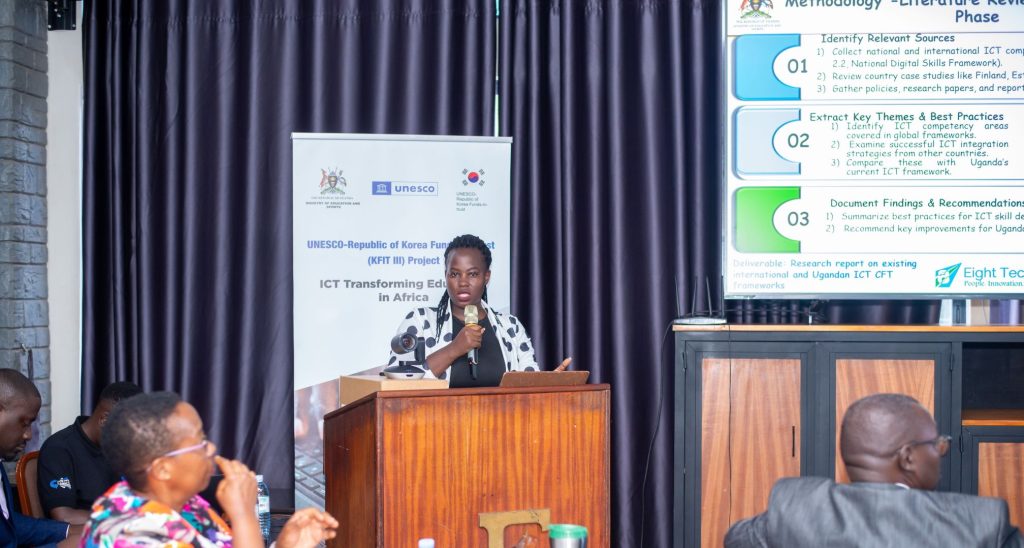
Ms. Fiona Nambogo presenting the revised framework.
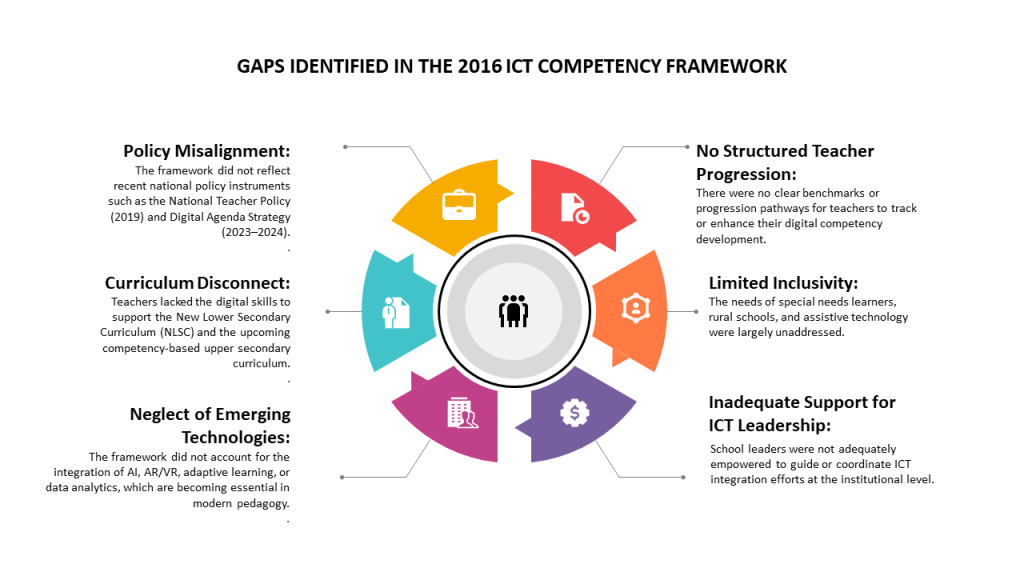
Strategic Way Forward: The Eight Tech Consults Approach
To achieve this update, we adopted a comprehensive, consultative, and forward-looking strategy to reform the ICT Competency Framework: through; ensuring Global Alignment with best practices including UNESCO’s ICT CFT and the EU’s DigComp 2.2, embedding emerging technologies, positioning Ugandan teachers on a path to internationally recognized digital competence.
The revised framework introduces: comprises of 6 core domains, 15 sub-domains and 3 knowledge/proficiency stages: Explorer → Integrator → Innovator and it supports both pre-service and in-service teacher development. This reform, led by Eight Tech Consults Ltd, marks a pivotal moment in Uganda’s digital education journey. It lays the foundation for a future in which teachers are not only digitally skilled but also empowered to deliver inclusive, competency-based, and tech-enabled education.
Together with MoES and UNESCO, we are proud to be shaping a national education system that is resilient, future-ready, and capable of meeting both local and global learning demands.